

Mobile app development in Tunisia
An app your customers keep on their phone, or the candour to tell you that a fast mobile website will do.
Reply within one business day
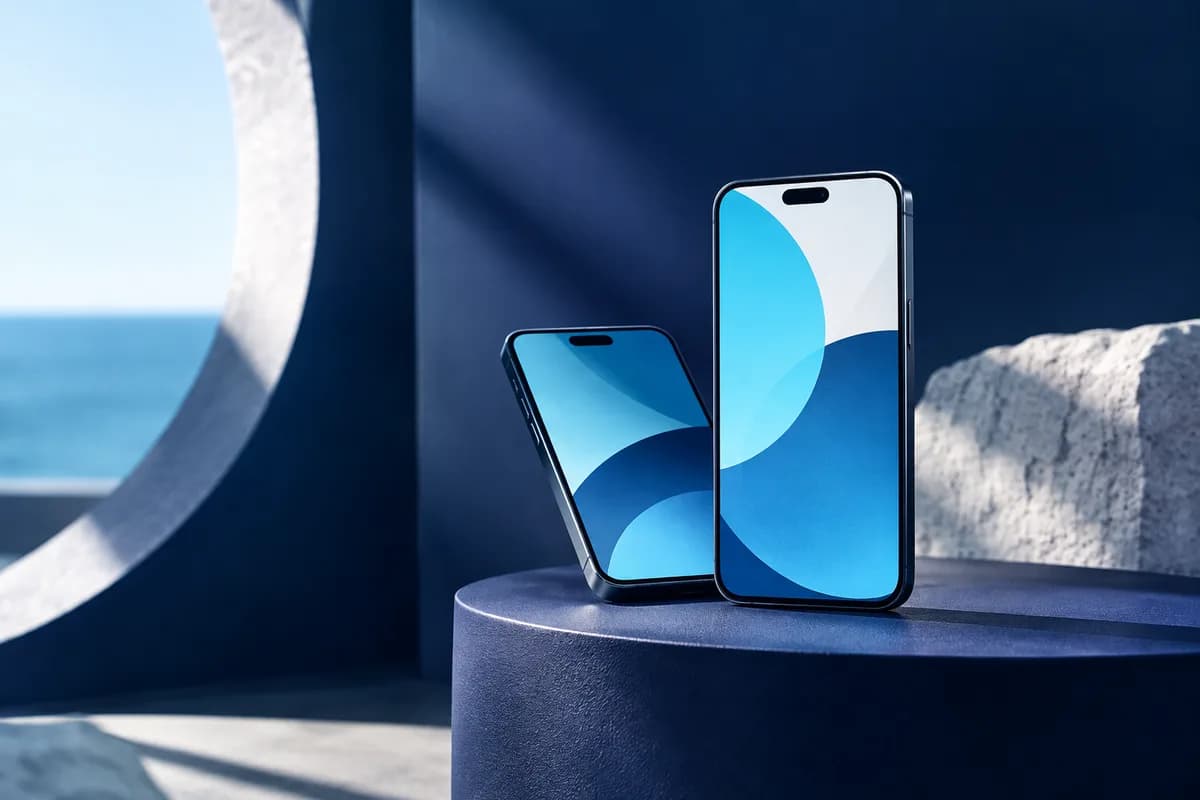
Web development & applications
- deliverables
- 7
- steps
- 4
- Tunisia
- Europe
- Middle East
They move forward with us
 Énergie et réseaux électriques
 Architecture d’intérieur
 Sécurité incendie et protection individuelle
 Services pétroliers
 Sécurité incendie et automatisme de portails
 Hydrogène vert et équipements industriels
 Formation continue
 Formation professionnelle
 Motos électriques
 Architecture d’intérieur, organisation professionnelle
 Machines industrielles
 Promotion immobilière et bâtiment
What you get
What the service includes
In short
Mobile app development in Tunisia with AD AZUR DIGITAL starts with a simple question: does your use case justify an installed app, or will a fast mobile website do? When an app is justified (frequent use, notifications, camera, location, offline mode, a listing on the App Store and Google Play), we design and build iOS and Android apps from a single TypeScript codebase (React Native with Expo), together with their web back office and API.
Read the full answer
The service is for Tunisian businesses, European companies looking for a senior French-speaking team close by, and Gulf brands that want an Arabic-first app. You receive a scoping note, tested prototypes, an app published under your own accounts, store listings in your audience's languages, the source code and a maintenance plan. Everything starts with a free audit.
App, PWA or website?
We start from real use: frequency, phone features, the need for a store listing. Before any development, you know whether an app is justified, and which kind.
Prototypes tested hands-on
Journeys designed for the thumb, clickable prototypes tested on real devices and in your audience's languages, all before the first line of code.
iOS and Android, one codebase
A shared TypeScript codebase (React Native with Expo) for both platforms: less code to maintain, and improvements shipped to every user at the same time.
Back office and API included
Users, content, notifications and analytics managed from a web interface, on an API you own and can host wherever you choose.
App Store and Google Play publishing
Store listings, privacy declarations, test builds and submission for Apple and Google review, all under your company's own accounts.
Native Arabic and RTL
Cleanly mirrored interfaces, readable Arabic type, mixed numbers and text under control: an app designed for the Gulf and the Maghreb, not flipped as an afterthought.
Deliverables
What you receive
- Scoping note: native, cross-platform or PWA, with the choice justified by your actual use cases
- Clickable prototypes of the key journeys, tested on iPhone and Android
- iOS and Android app published under your own developer accounts
- Web back office and documented API to manage content, users and notifications
- App Store and Google Play listings in your languages, with screenshots and privacy declarations
- Source code in your Git repository, with access and update documentation
- Maintenance plan: iOS and Android updates, dependencies, crash monitoring
Method
How we move forward
- 01
Audit and scoping
Use cases, audiences, phone features, data constraints: we decide between an app, a PWA or a mobile website, and set the scope of the first release.
- 02
Wireframes and prototype
Key journeys are designed, then tested hands-on by a few people from your target audience. We fix things at prototype stage, where a change costs least.
- 03
Iterative development
Installable test builds (TestFlight, Google Play internal testing) at every stage: you watch the app take shape on your own phone.
- 04
Launch and follow-up
Submission to Apple and Google, phased rollout, crash and review monitoring, then updates in step with iOS, Android and your feedback.
Everything worth knowing before you startThe full guide, with the recurring questions and who it is for.
Who is it for?
Who this service is for
Businesses across Tunisia
Manufacturers, distributors, clinics and retail chains in Sfax, Tunis and the Tunisian Sahel that need a loyalty, ordering or field app running reliably on mid-range Android phones.
Companies in Europe
Businesses in France, Belgium or Switzerland looking for a senior French-speaking team close by, in a neighbouring time zone, and agencies that subcontract on a white-label basis.
Brands in the Gulf
Companies in the UAE, Saudi Arabia or Qatar that want an Arabic-first app, bilingual in Arabic and English, designed right to left from the very first wireframe.
Field teams and internal services
Sales reps, technicians or drivers who need to capture data, take photos and sync their work, including when there is no network.
The guide
When does mobile app development actually make sense?
Many projects start with 'we need an app'. The real question lies elsewhere: will your customers or your staff open it every week? An installed app earns its place when use is frequent, when it needs the phone itself (camera, location, notifications, barcode or QR code scanning) or when it has to work without a network.
For occasional needs, a fast mobile website often does better: nothing to download, no Apple or Google review, a single version to maintain. That is why mobile app development in Tunisia with AD AZUR DIGITAL starts with honest scoping. If a well-built corporate website or a PWA does the job, we tell you so before quoting anything.
Three types of use come up often:
- Loyalty and ordering: a retailer, restaurant or distributor that wants to stay in touch with its regular customers.
- Field work: sales reps, technicians or drivers who capture data, take photos and sync, sometimes offline.
- Customer service: a clinic, school or service provider giving access to a file, a schedule or a progress update.
Native, cross-platform or PWA: which should you choose?
There are three technical routes, and none is right everywhere.
| Criterion | Native (Swift, Kotlin) | Cross-platform (React Native) | PWA (installable web app) |
|---|---|---|---|
| Listed on the App Store and Google Play | Yes | Yes | Not directly: installed from the browser |
| Access to phone features | Full | Very broad | Partial, depends on the browser |
| Offline use | Full | Full | Possible, with limits |
| Codebases to maintain | Two | One | One, shared with the website |
| Updates | After Apple and Google review | After review, some fixes sent over the air | Instant |
Our default is cross-platform: React Native with Expo, written in TypeScript. One codebase produces both apps and shares the language, sometimes the logic, of your website and back office. A PWA remains the right answer when a store listing adds nothing. Fully native development is justified for specialist needs: advanced augmented reality, heavy audio or video processing, demanding Bluetooth accessories. If your project falls into that category, we will tell you at the audit rather than force our favourite tool.
What keeps an app on people's phones?
An app is judged in its first few minutes. If sign-up drags on, if the home screen is slow to appear or if the first notification reads like an advert, it gets deleted. So we work on three things from the wireframe stage: a useful first session without an endless form, screens that load quickly even on a modest phone, and notifications the user has actually chosen.
The real audience also sets the priorities. In Tunisia, an app must stay smooth on mid-range Android phones and patchy connections. In the Gulf, iPhones are often more common among the target audience, and the app will frequently be used in both Arabic and English. In Europe, data protection and accessibility matter from the design stage: the European Accessibility Act has made accessibility a requirement for certain digital services since June 2025 (source: EU Directive 2019/882). We test on devices that match your audience, not just on the developer's own phone.
What happens behind the screen?
The app is only the visible part. Behind it you need an API that handles accounts, data and payments, a back office where your team publishes content and answers requests, a notification service and audience measurement that respects consent. This is often where a project is won or lost, and it is the part many quotes underestimate.
Payment options are decided at the scoping stage. Digital content sold inside the app, such as a subscription, generally has to go through Apple's and Google's in-app purchases, with their rules and commissions. An order or a booking goes through your own payment provider, which often differs between Tunisia, Europe and the Gulf.
We build that foundation with the same tools as our web apps and SaaS: TypeScript, PostgreSQL, Docker, hosted with the provider of your choice. Repetitive tasks triggered by an action in the app (confirmations, reminders, CRM updates) can be handled by an n8n workflow rather than custom code; the article n8n, an AI agent or custom software helps you draw the line.
How does an app get onto the App Store and Google Play?
Publishing is a project stage in its own right, with its own rules:
- Apple and Google developer accounts opened in your company's name, not ours; have a D-U-N-S number ready, as both platforms ask for one on company accounts.
- Store listings written in your audience's languages (French, English, Arabic): copy, screenshots, keywords.
- The privacy declarations both platforms require, matched to what the app actually collects.
- Test builds shared with your team (TestFlight at Apple, internal testing at Google).
- Submission, replies to any reviewer feedback, then a phased rollout.
One limit to be aware of: review times depend on Apple and Google, not on us. Rejections do happen, for example because of an incomplete listing, a missing demo account for reviewers or a misapplied payment rule; they can be fixed, but they belong in the schedule.
On data, we name the frameworks that apply (GDPR in Europe, Tunisia's Organic Law No. 2004-63, the PDPL in Saudi Arabia) and take them into account from the design stage: consent, collecting only what is needed, and in-app account deletion, which Apple and Google require whenever users can sign up. None of this replaces your lawyer's advice.
What if the app needs to speak Arabic?
An Arabic app is more than translated text. The whole interface flips from right to left: navigation, back gesture, alignment, directional icons. Some icons must not flip, such as a video play button or a logo. Arabic typography needs adapted sizes and line spacing, and mixed text (a price, a reference, a brand name in Latin script) must display without scrambling.
We handle Arabic and RTL natively from the first wireframe, as we do on our multilingual and RTL websites. That is decisive for a brand addressing the Gulf and the Maghreb at the same time, and a real advantage for a European company opening an Arabic-speaking market without rebuilding its app.
What does an app cost, and what comes after launch?
Cost depends on scope, not on the name of the technology: number of screens, back office, payments, offline mode, number of languages, integrations with your tools. We quote after an audit, on a written scope; our Pricing page explains how we work.
What happens after launch matters just as much. Apple and Google release new operating system versions every year and keep raising their technical requirements: an app that is never updated eventually stops being offered to some users, or is removed altogether. Plan a maintenance budget from the start: operating system and dependency updates, crash monitoring, and small improvements driven by user reviews.
Why build your app with AD AZUR DIGITAL?
Our team is based in Sfax, Tunisia's second economic hub, and works in French, English and Arabic. For a mobile app project in Sfax, Tunis or the Tunisian Sahel, scoping workshops can take place at your premises. Tunisia is on UTC+1 all year round: the same time as Paris in winter, one hour behind in summer, and three hours behind Dubai. Meetings fit within the working day of all three markets.
You leave with your code, your accounts and your documentation. To find out whether your project needs an app, a PWA or simply a better mobile website, request a free audit: all you need to bring is the goal, the intended users and the list of tools to connect.
FAQ
Frequently asked questions
The questions our clients in Tunisia, Europe and the Middle East ask before starting. Another question? Write to us.
How long does mobile app development take in Tunisia?
Timing depends on scope more than on technology: number of screens, back office, payments, offline mode, languages. A focused first release is measured in weeks, a full platform in months. Add Apple and Google's review, whose duration is not in the developer's hands. AD AZUR DIGITAL sets the schedule after a free audit, on a written scope, and delivers installable test builds throughout the project.
Should I choose a native or a cross-platform app?
For most business apps, cross-platform is enough and easier to maintain: a single codebase (React Native with Expo, in TypeScript) produces the iOS and Android versions. Fully native development in Swift and Kotlin is justified for specialist needs such as advanced augmented reality, heavy video processing or demanding Bluetooth accessories. AD AZUR DIGITAL makes the call during scoping, based on your real use cases, and explains the choice in writing.
Can a PWA replace a mobile app?
Often, yes, when use is occasional and a store listing adds nothing. A PWA is a website that can be installed on the home screen, with an optional offline mode and a single version to maintain. Its limits: no App Store listing, partial access to phone features and, on iPhone, notifications that only work once the user has added the app to their home screen. Scoping tells you whether those limits matter for your project.
How much does a mobile app cost for a small or mid-sized business?
There is no serious price without a defined scope. Cost depends on the number of screens, the back office, payments, offline mode, the number of languages and integrations with your tools. You also need to plan for regular maintenance as new versions of iOS and Android come out. AD AZUR DIGITAL provides a quote after a free audit, on a written scope; our Pricing page explains how we work.
Who owns the code and store accounts of an app built by an outside provider?
With AD AZUR DIGITAL, you do. The Apple and Google developer accounts are opened in your company's name, the source code lives in your Git repository and the API is hosted with the provider of your choice. You receive the access and documentation needed to keep developing the app with us or with another team. That is a starting condition of the project, not an option.
In the same area
Go further with Web development & applications
Next.js corporate websites
A website that explains your business clearly, reassures buyers and turns visits into qualified enquiries.
E-commerce & marketplaces
A store that actually sells: fast on mobile, with the payment methods your customers use, and built around your logistics.
Web apps & SaaS
An application built around the way you actually work, with the code, the data and the accounts kept in your name.
Redesign & migration to Next.js
A faster site your team can actually update, without losing the rankings, content and enquiries your current site still brings in.
Multilingual & RTL websites
Every language becomes a real version of your website, easy to find and credible to buyers in Tunisia, Europe and the Gulf.
Performance & Core Web Vitals
A site that loads fast and responds to the first tap, measured on your real visitors rather than on a lab score.
A project in this area?
Two minutes to tell us what you need, and we come back with a first read of your situation.
Reply within one business day