

Our work in Tunisia, published only with the client’s written consent
No borrowed logos, no figures from nowhere. Every case study follows the same thread, from context to measured result, and appears here only once the company concerned has signed it off.
Reply within one business day

Proof, without the staging
- Tunisia
- Europe
- Middle East
Our rule
Why isn’t this page a wall of logos?
A logo on a website proves very little. Anyone can line up ten of them, and you have no way of knowing whether the project existed or what it changed for the company.
So we follow a simple rule: a project is published only with the company’s written consent, and only with figures it has been able to check. No consent, no publication.
It is slower than filling a showcase, but it is the only way to keep every line true.

What you will see here
- Case studies reviewed and approved by the company, which appears under its own name when it agrees
- Dated figures, with their source and measurement method
- The options we ruled out, and what did not work first time
What you will never see here
- A logo or testimonial without written consent
- A percentage without a period or a source
- A promise of rankings or results
- A mock-up presented as client work
Reading a case study
How to read a case study in four steps
All our case studies follow the same thread, so you can compare them with one another, and with what others show you.
- 01
Context
Who the company is, which market it operates in, and where it started. A dated starting point, otherwise the comparison means nothing.
Our ruleThe sector is always stated; the name only with consent.
- 02
Diagnosis
What we found before touching anything: what was blocking, what already worked, what could be measured.
Our ruleWe separate what was observed from what is assumed.
- 03
Action
What was done, in what order and why, including the options ruled out and what did not work first time.
Our ruleVerifiable deliverables, not adjectives.
- 04
Result
A measured figure, with its period, its tool and its source. If there is no honest figure, no result is shown.
Our ruleNo promise of rankings or results.
Sectors
What goes wrong online in six sectors
These are not client references but reading grids: for each sector, the most frequent blockers, and the expertise pages that answer them.

Industry
A technical catalogue nobody can find, a website that fails to reassure a European buyer, quote requests lost between phone calls and messaging apps. The goal: be readable and reachable, in the buyer’s language.
Pages that answer it

Food production
An importer searches, compares and checks a website before replying. Product sheets, certifications, heavy PDF catalogues, brand image: most of it is decided before the first conversation, in French, English and often Arabic.
Pages that answer it

Healthcare
Patients search near home, on their phone, and pick the clearest listing. Appointments booked by phone until the line saturates, personal data to protect: the legal framework matters as much as the design.

Tourism
Booking platforms take a commission on every stay. A fast site in several languages, including Arabic and English for visitors from the Gulf, honest visuals and well-managed reviews make direct booking possible.

Real estate
Listings scattered across portals, enquiries never followed up, uneven visuals. For a development aimed at the diaspora or the Gulf, the page must convince in Arabic and English, and every enquiry needs a quick reply.

Retail and e-commerce
An online shop is not enough: it needs qualified traffic, a payment method suited to the country and follow-ups that bring back abandoned baskets. Every step can be measured, and measuring is how you learn where to act first.
Pages that answer it
Case studies
The case studies we have published
The figures are the ones the company has reviewed and approved.

 Sector · Electrical power and networks
Renco: a catalogue website for electrical power quality
- of development
- 1 month
- product sheets online
- 78

 Sector · Interior architecture
Mouna Sahnoun: a showcase website for an interior architect in Sfax
- service pages
- 9
- case studies online
- 3
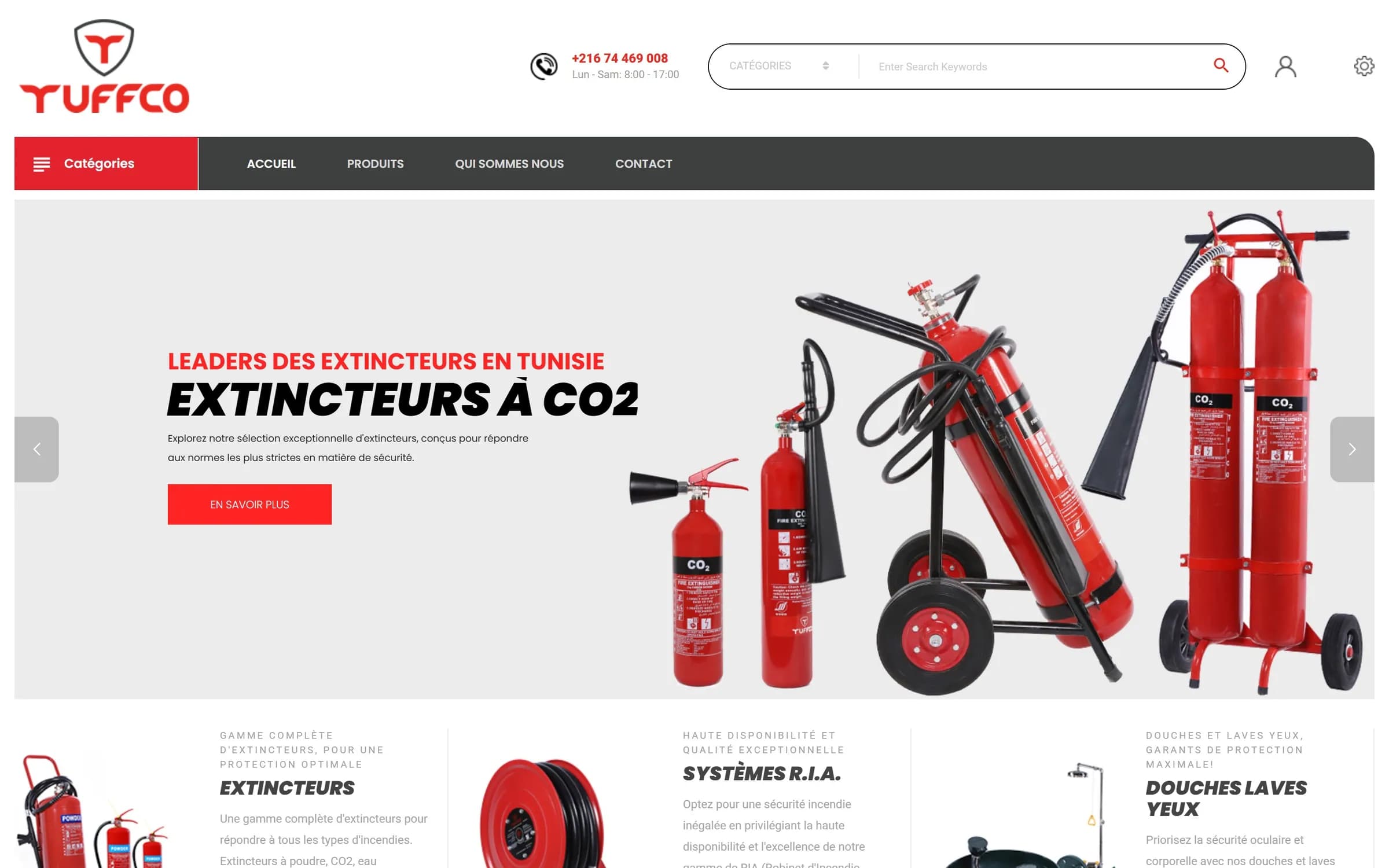
 Sector · Fire safety and personal protective equipment
Tuffco: a catalogue website for fire safety equipment
- product families
- 8
- subfamilies in the catalogue
- 22
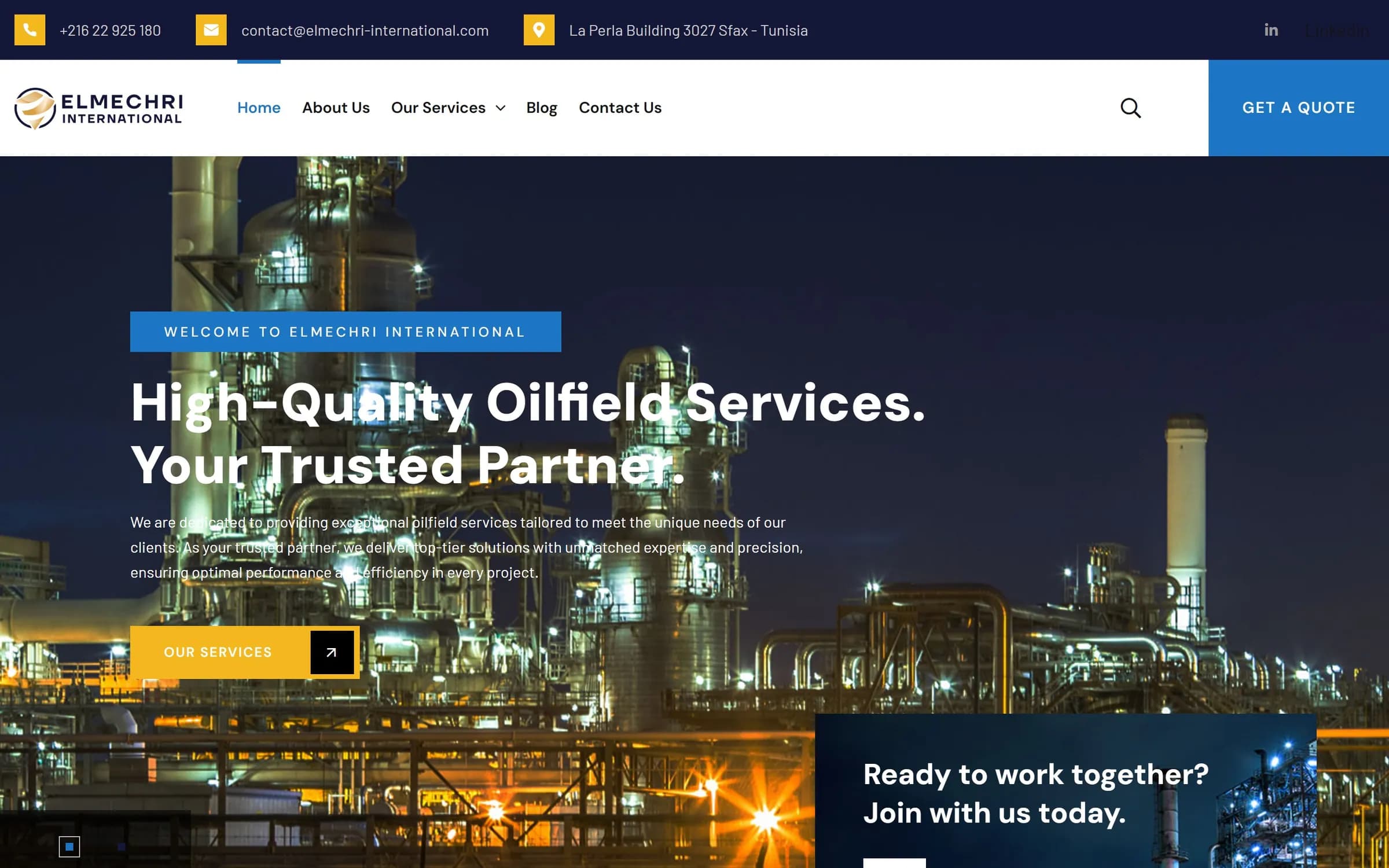
 Sector · Oilfield services
Elmechri International: a showcase website for oilfield services in Libya and the MENA region
- service pages
- 4
- sectors presented
- 6
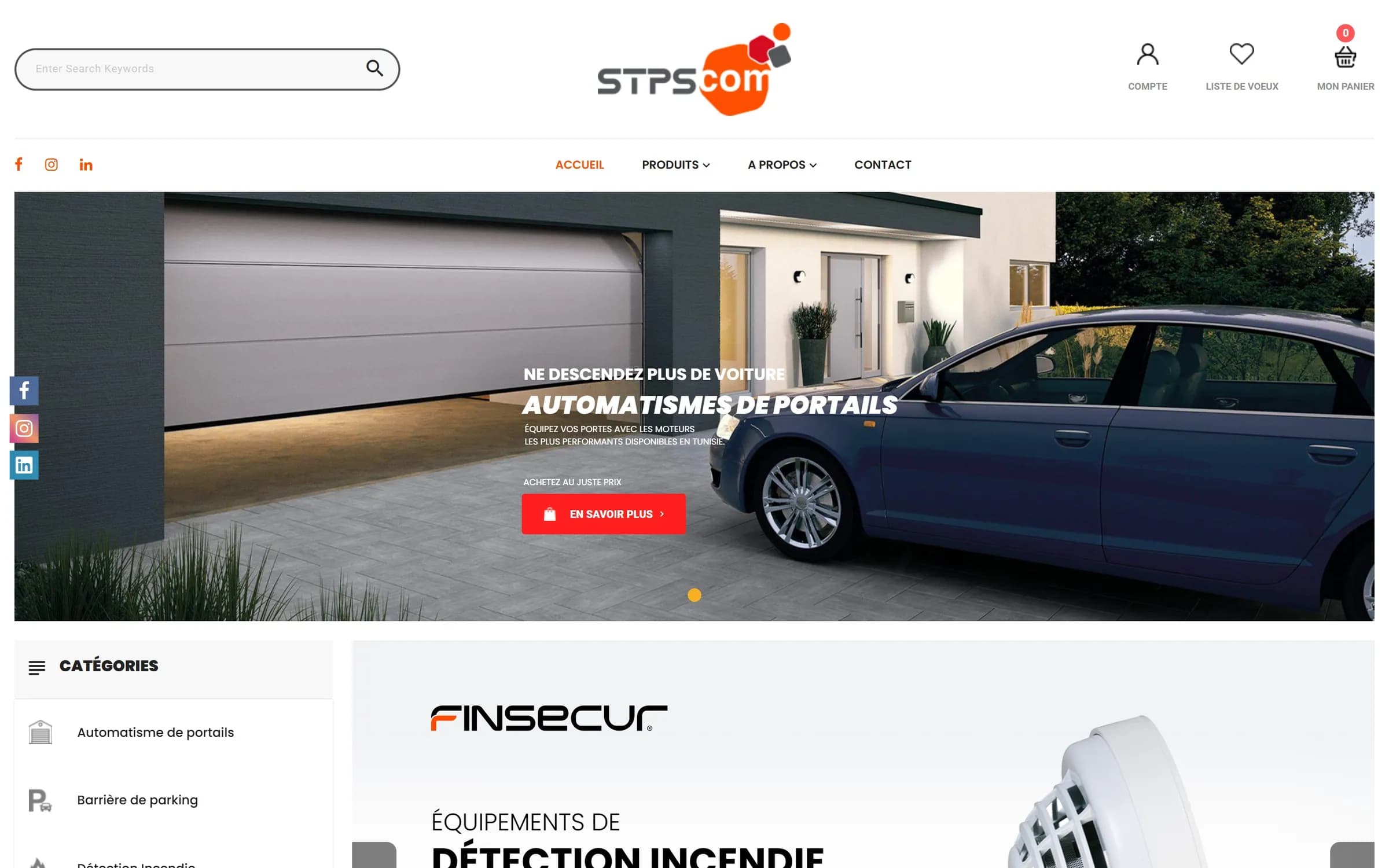
 Sector · Fire safety and gate automation
STPSCOM: an online store for fire detection and gate automation
- product pages online
- 135
- product families
- 5
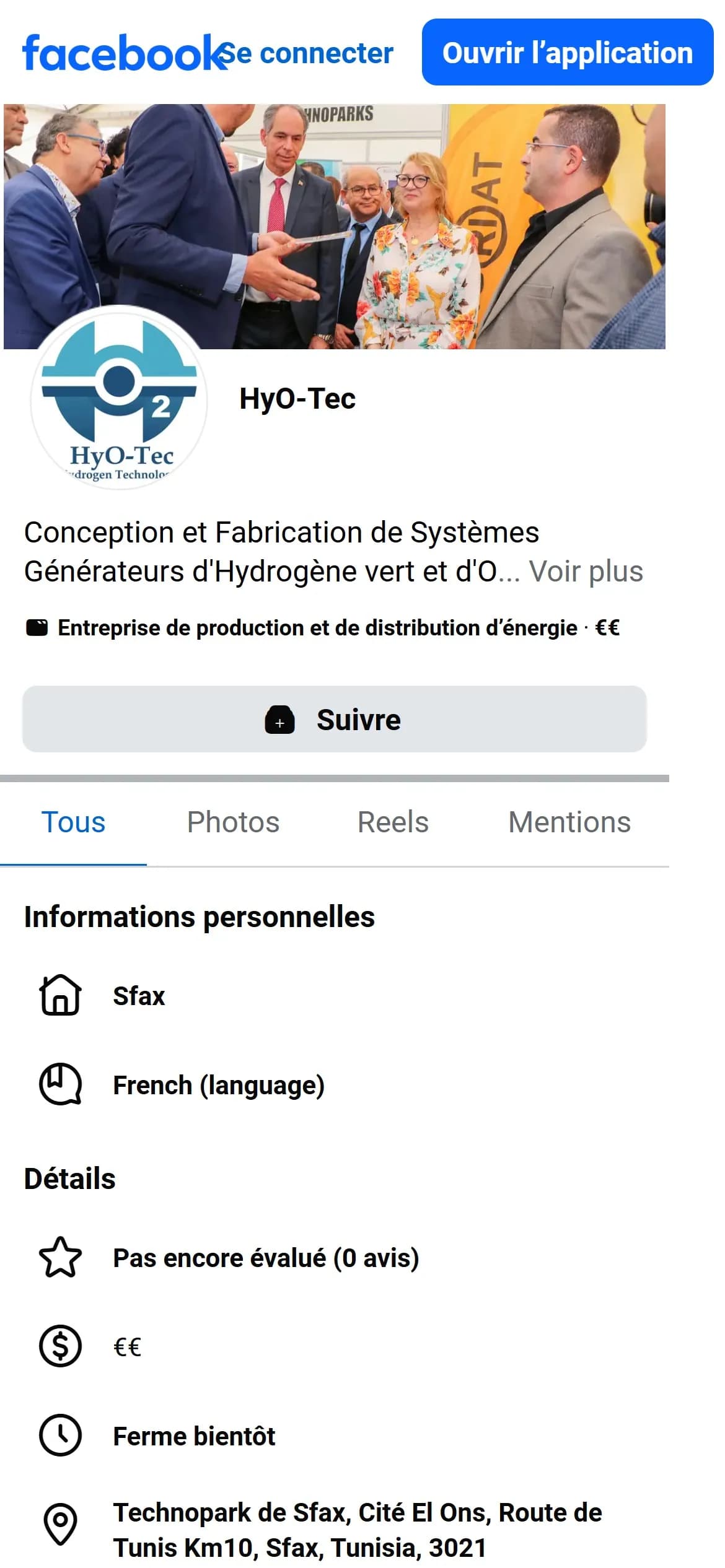
 Sector · Green hydrogen and industrial equipment
HyO-Tec: social media management for a green hydrogen start-up
- followers as of 29 September 2026
- 1,202
- content formats: photo, visual, video
- 3
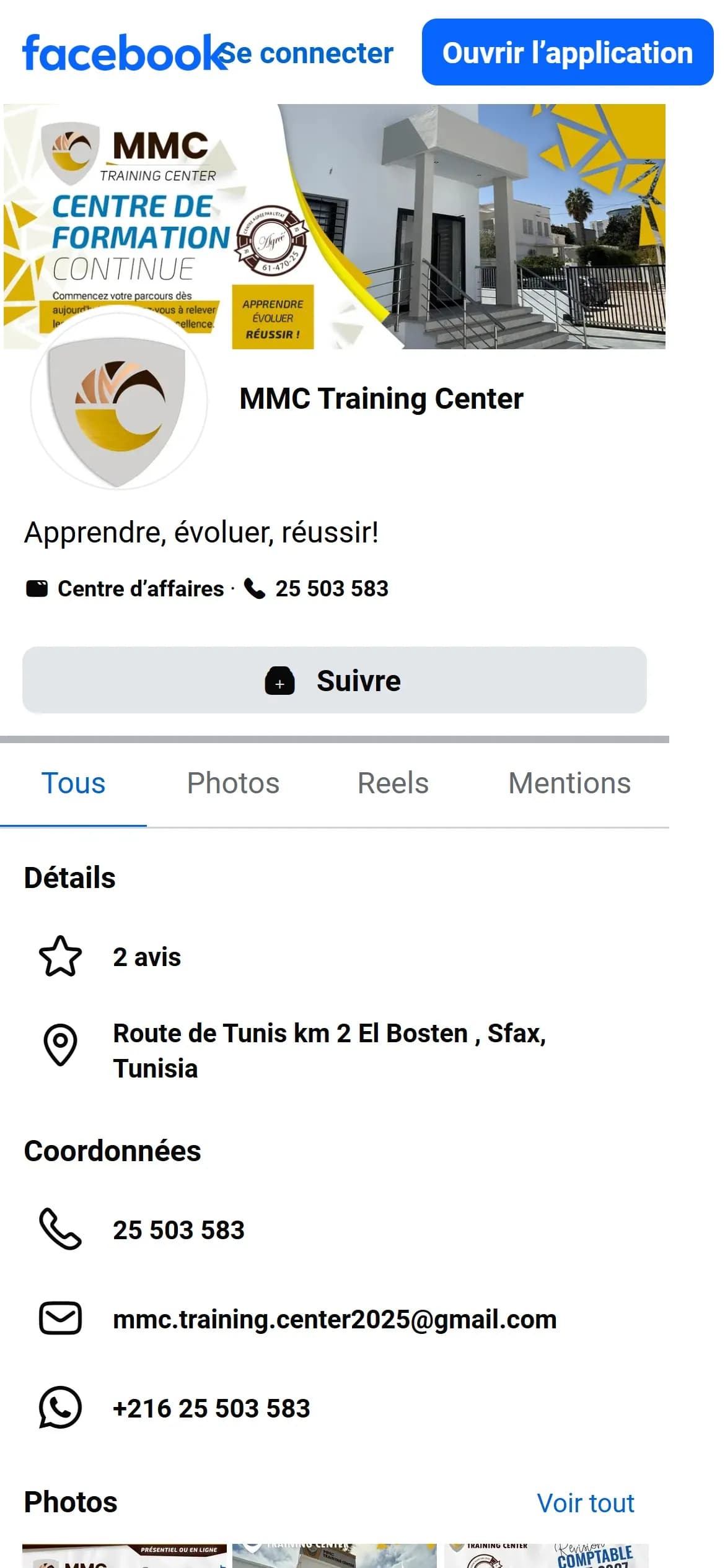
 Sector · Continuing education
MMC Training Center: managing a training centre’s social media
- services delivered
- 4
- followers on 29/09/2026
- 7,825
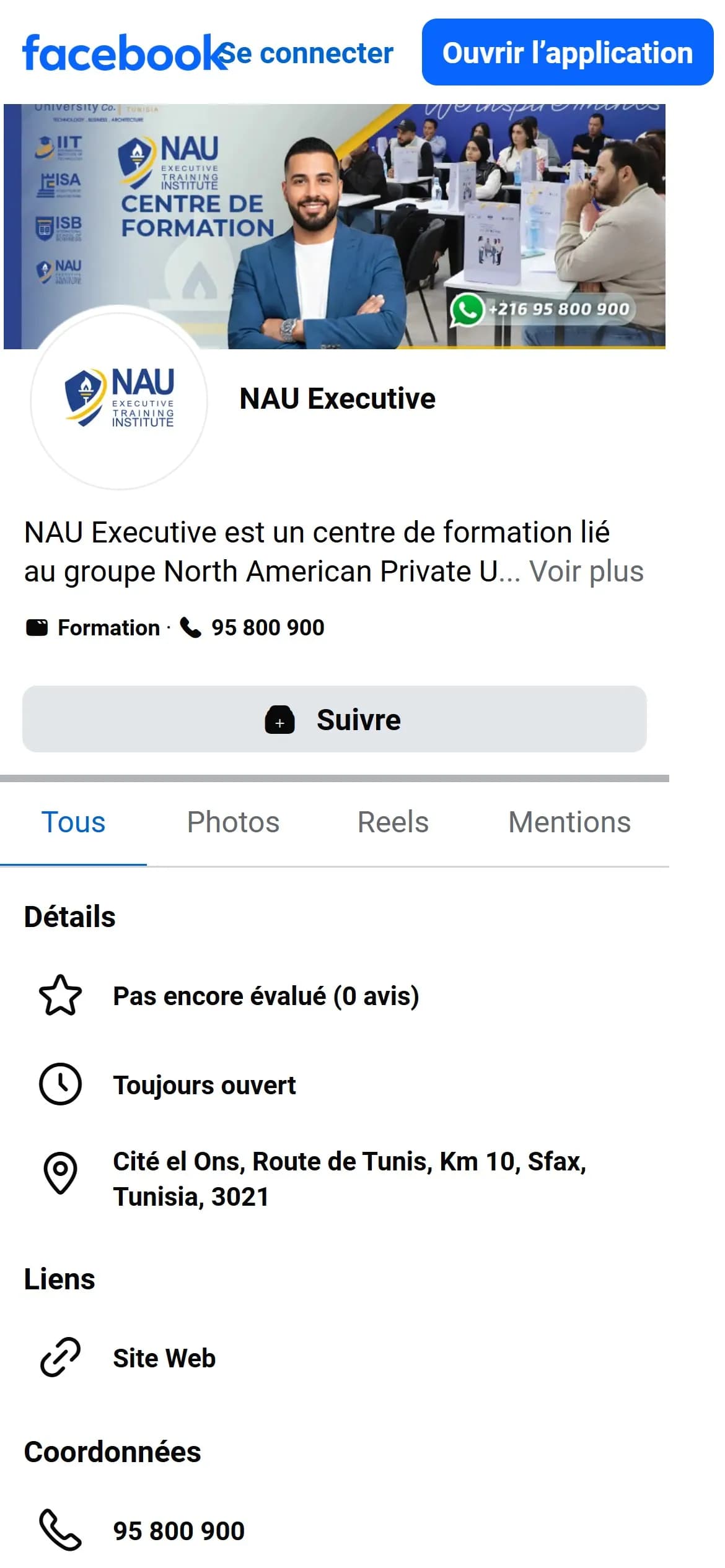
 Sector · Professional training
NAU Executive: social media, advertising and prospecting for a training centre
- strands: social media, ads, prospecting
- 3
- followers as of 29 September 2026
- 7,104
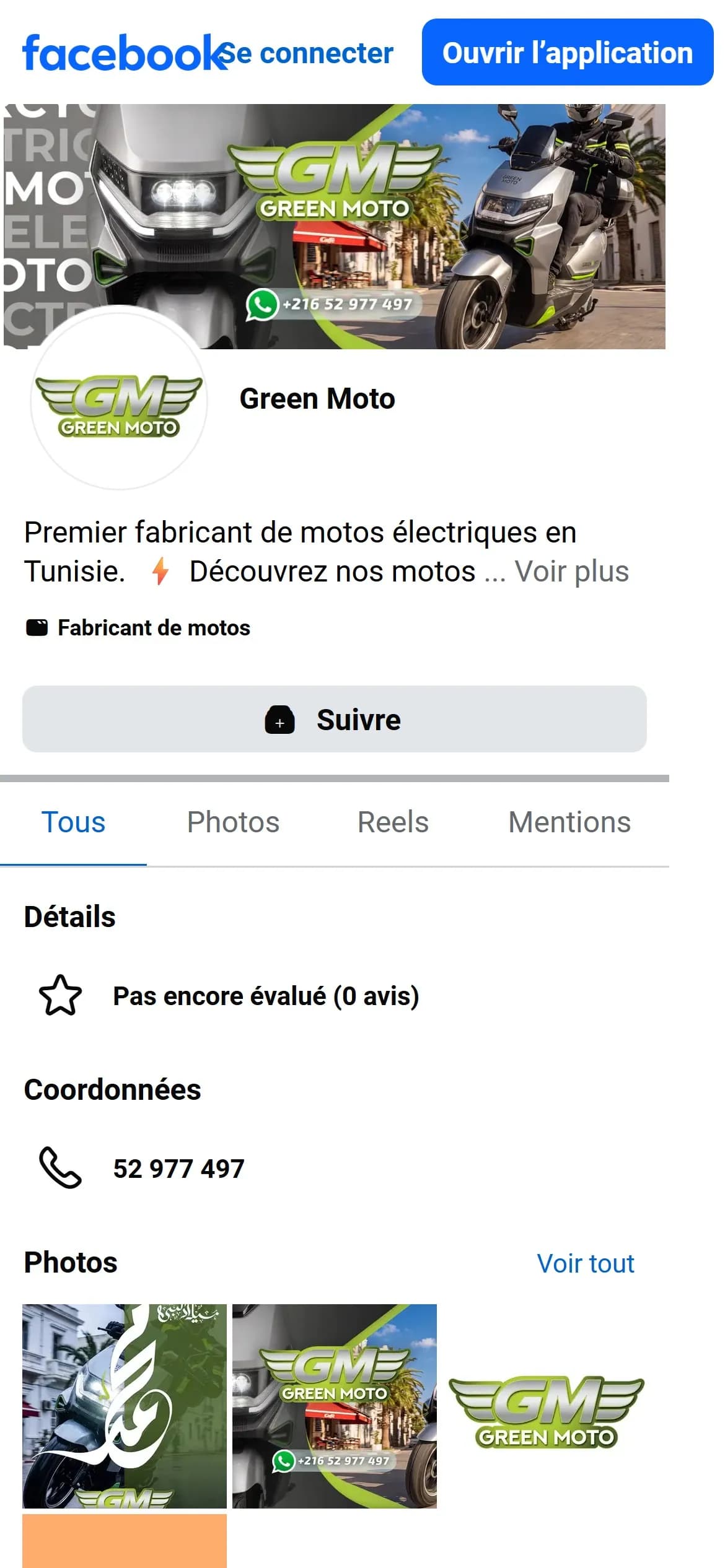
 Sector · Electric motorbikes
Green Moto: social media and visual identity for an electric motorbike maker
- services delivered
- 3
- followers on 29 Sept 2026
- 783
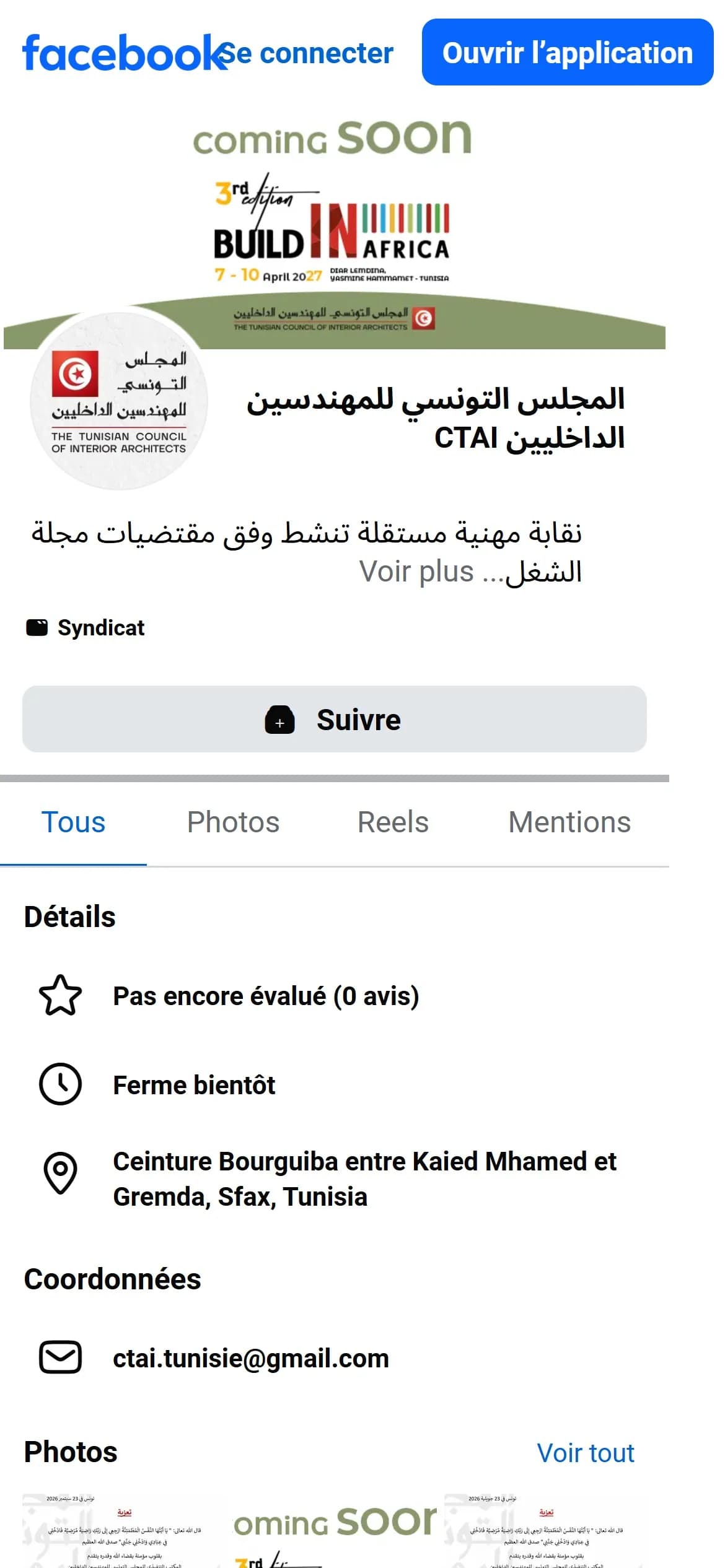
 Sector · Interior architecture, professional body
CTAI: LED screen content and help with exhibition hall dressing
- areas of work
- 2
- edition of Build in Africa announced for 2027
- 3rd
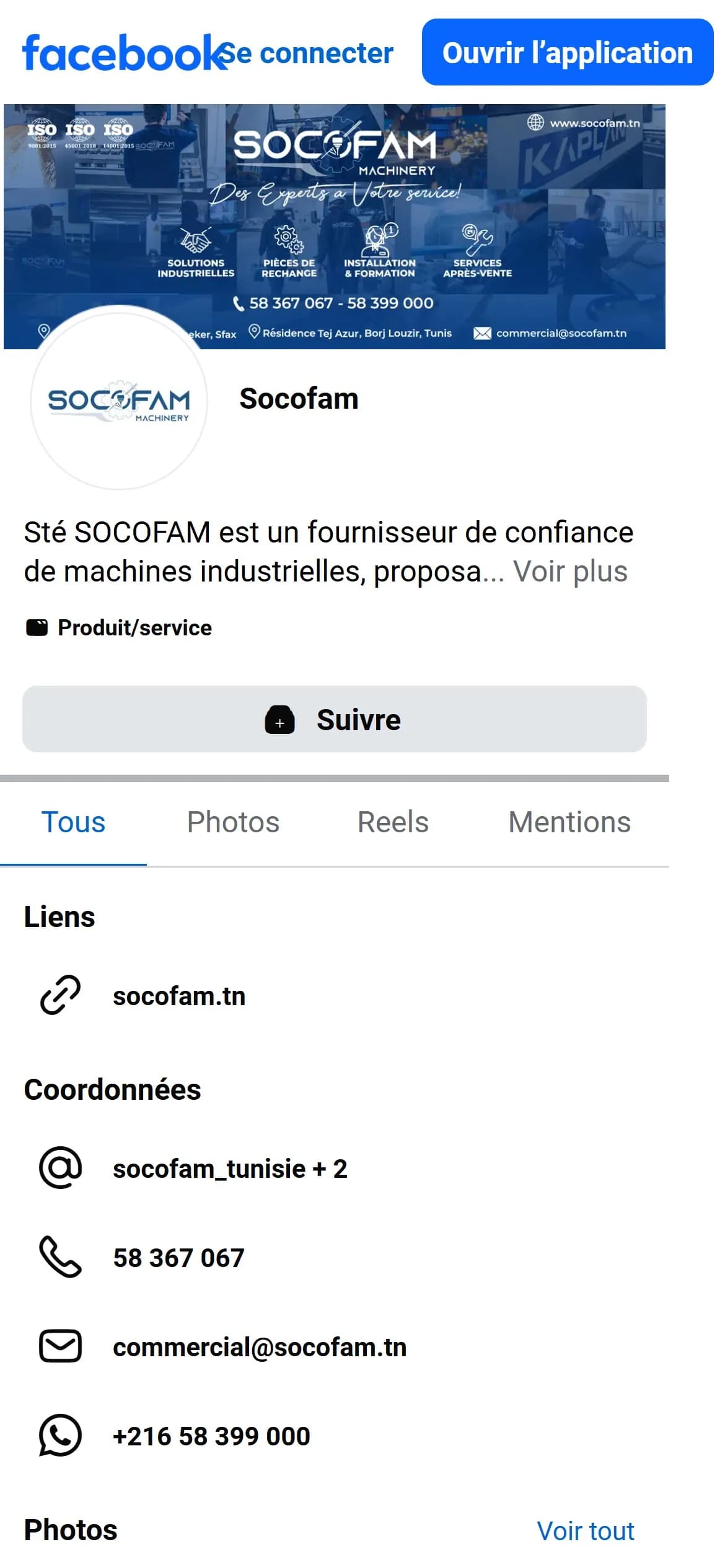
 Sector · Industrial machinery
Socofam: social media management for an industrial machinery supplier
- Facebook followers on 29 Sept 2026
- 10,598
- services entrusted to the agency
- 5
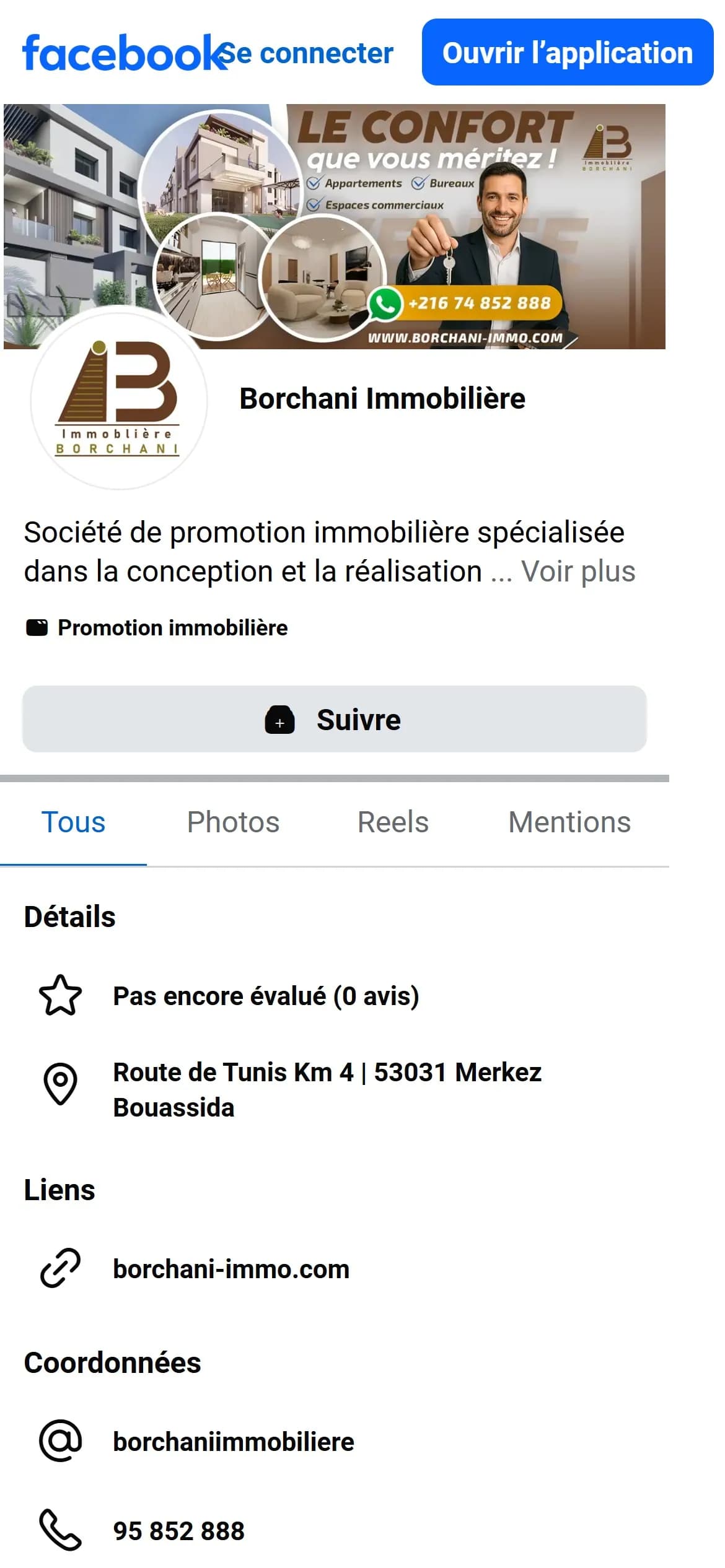
 Sector · Property development and construction
Borchani Immobilière: social media management for a property developer
- followers on 29 September 2026
- 1,764
- content formats
- 3
BEHIND THE SCENES
The work, while it is being done
Most agencies show the finished result. We also show the 6 a.m. shoot, the set rebuilt three times, and the line of code that would not compile.
What we measure
A figure only exists if it has a date and a source
Before talking about results, we agree what will be counted, how, and over which period. These are the indicators we use most often.

We guarantee neither a ranking nor a result. We measure, we date, we cite our sources.
Visibility
Impressions, clicks and brand queries in Google Search Console, compared over equivalent periods.
Enquiries received
Forms, calls and messages that actually arrived, counted at the source rather than estimated.
Perceived speed
Core Web Vitals measured on real visits: LCP under 2.5 s, INP under 200 ms, CLS under 0.1 (source: web.dev).
Time recovered
Length of a task before and after automation, timed on a sample and documented.
Cost per lead
Advertising budget divided by the enquiries obtained, not by clicks or impressions.
Presence in AI answers
A fixed set of questions, put to several assistants at regular intervals. Answers vary, so every reading is dated.
Frequently asked questions
What people ask about our references
Honest questions deserve honest answers. If yours is not here, write to us.
Why are there no client names on this page?
Because a reference is only worth something if it is real and consented to. We publish a name, a logo or a testimonial only with the company’s written consent, and only with figures it has reviewed. Until that consent exists, we would rather show nothing than something nobody can verify. The page fills up as agreements come in.
Can I see a live demonstration?
Yes, as part of the free audit: we can show you how the work unfolds, on this very website, built with the stack we propose, or on mock-ups made with fictional data. We do not show a client’s project without their written consent.
How do I know a published figure is real?
Every figure comes with its period, the tool that measured it and its source, for example Google Search Console or the company’s own tracking. You can ask to see the method. A figure without a date or a source is not published, and we never promise that the same result will repeat for you.
How can I check the quality of your work before committing?
Start with the free audit: you see how we diagnose your real situation, using your own data. After that, the work moves in deliverable, checkable stages, and the code, data and accounts remain yours. You judge on evidence before moving to the next stage.
My sector is not on the list. Can you still help?
The six sectors above are those whose digital habits we know well, but the underlying problems appear everywhere: being found, convincing, handling enquiries, measuring. We address companies in Tunisia, Europe and the Gulf. The free audit will tell you plainly whether we are the right team for you.
A comparable project?
Two minutes to describe your situation. We come back with a first reading, and tell you plainly whether we are the right people to help.
Reply within one business day